


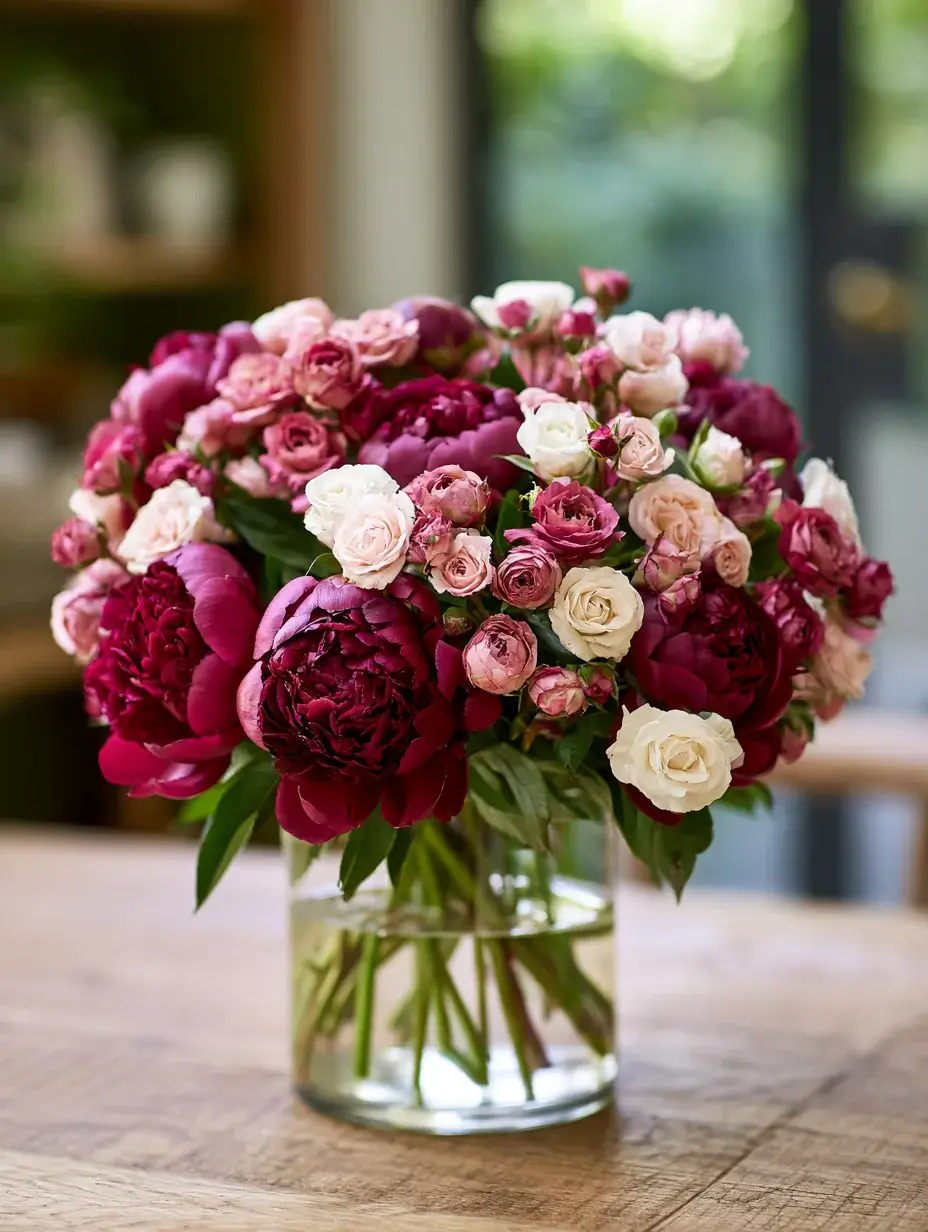
There is nothing quite as dramatic and elegant as a burgundy peony. With their lush, layered petals and rich, velvety hues, they naturally become the star of any room. However, because these focal blooms carry so much visual weight, arranging them requires a thoughtful approach to color, texture, and structure.
Whether you are styling a rustic autumn tablescape or a romantic centerpiece, this step-by-step guide will help you select, arrange, and care for burgundy peonies like a professional florist.
1. Selecting the Perfect Burgundy Peonies
The foundation of a stunning arrangement starts at the market. Since the focal blooms will shape the arrangement’s overall character, choose your peonies carefully based on color, condition, and maturity.
- Vary the Maturity: Choose flowers at several stages of opening. Tight buds add promise and longevity, partially opened blooms reveal beautiful layered petals, and fully open heads provide immediate volume.
- Check the Condition: Look for petals that are fresh, supple, and free from browning, bruising, or translucent edges. Stems should feel firm and support the flower without bending or appearing slimy at the cut end.
- Mind the Undertones: Burgundy is not a single shade; peonies may lean toward wine, plum, or deep red. A little variation adds dimension, but select a group with a shared undertone so the arrangement feels intentional.
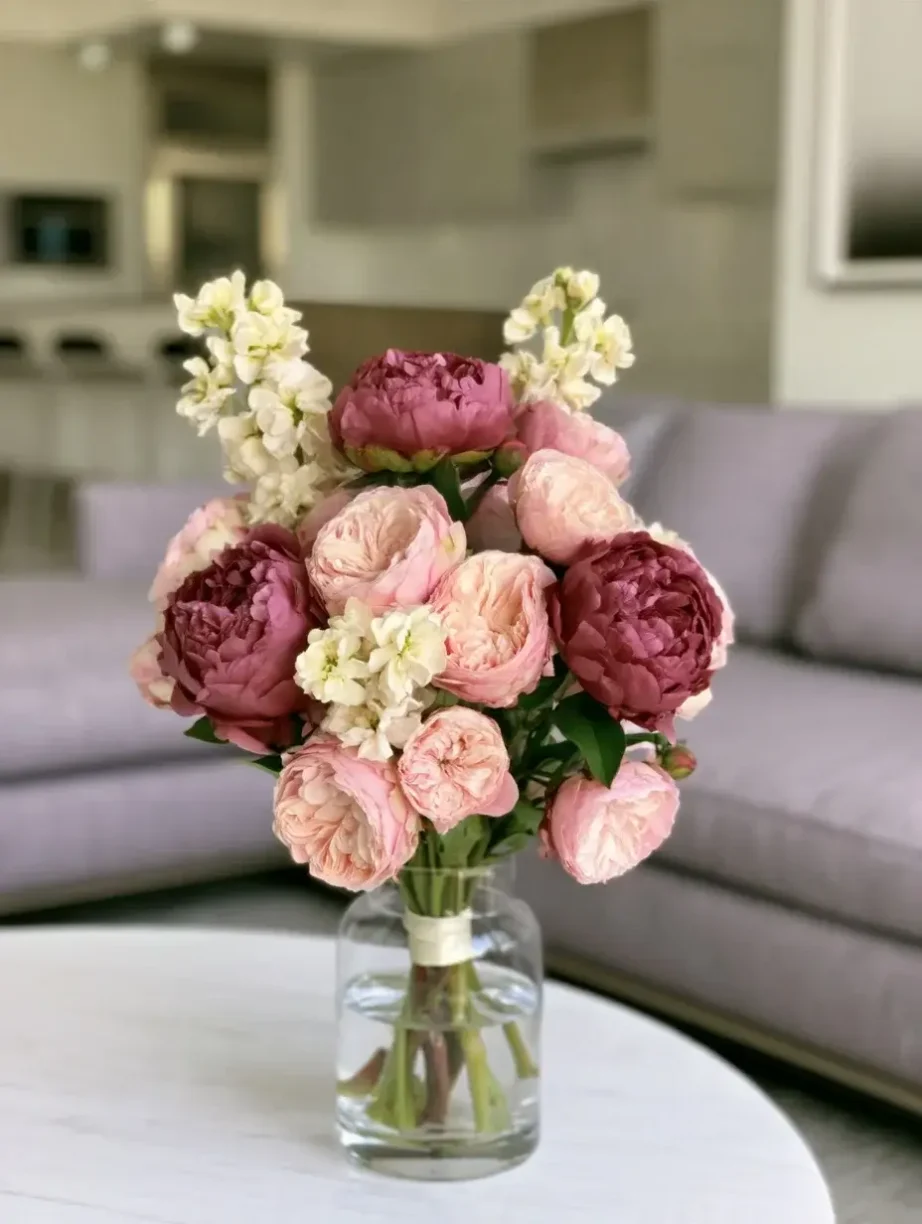
A great palette frames the dark flowers rather than competing with them. As a florist, I always recommend considering whether your peonies read warm (red or brown undertones) or cool (plum or violet notes).
2. Building a Supporting Color Palette
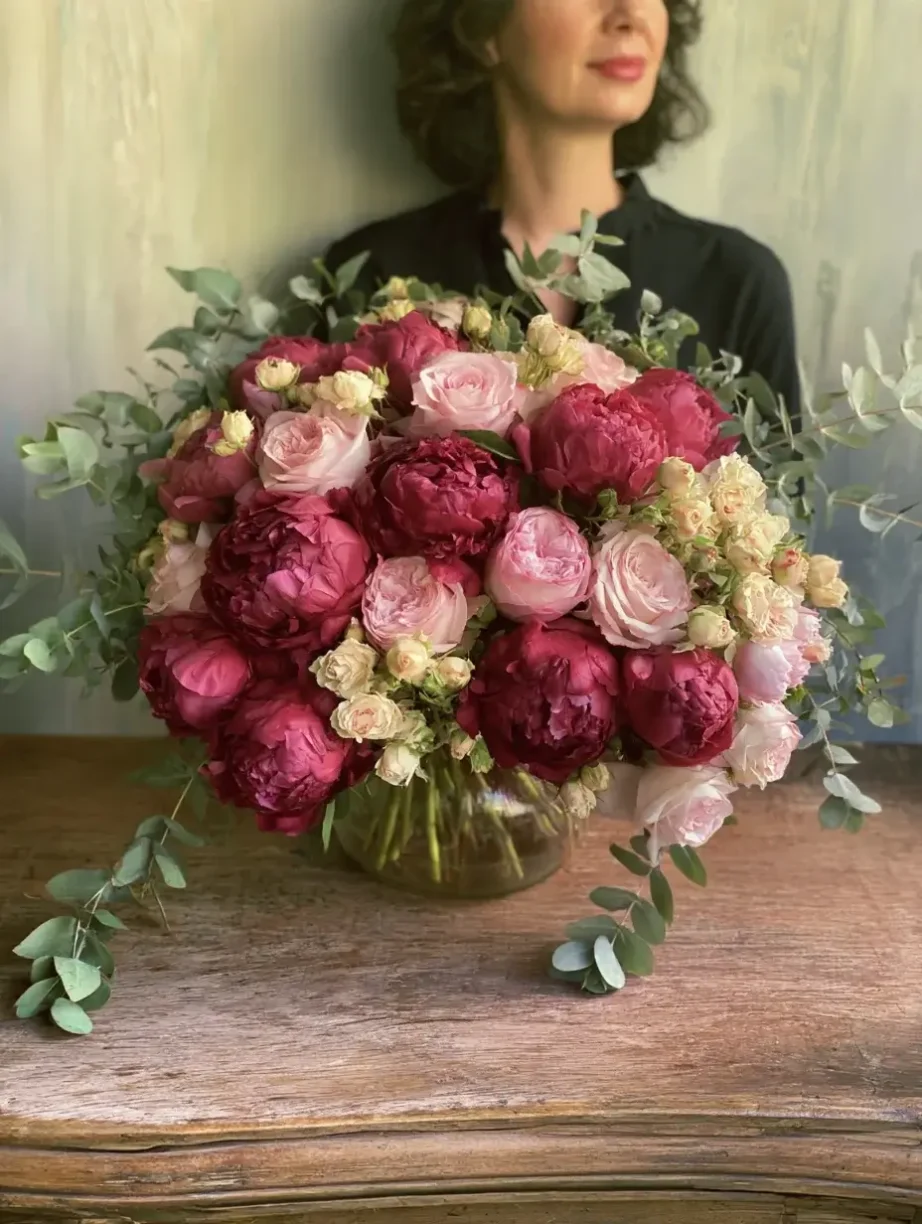
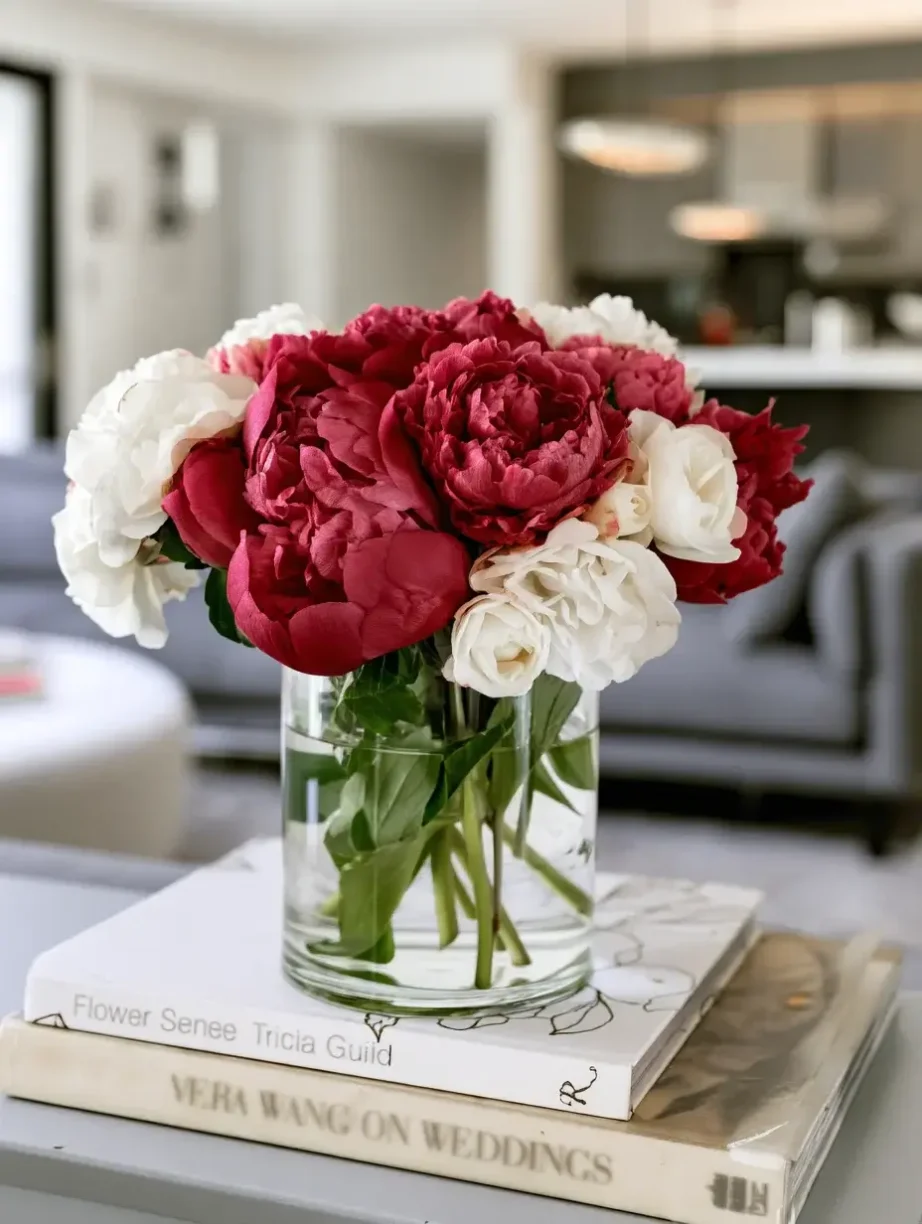
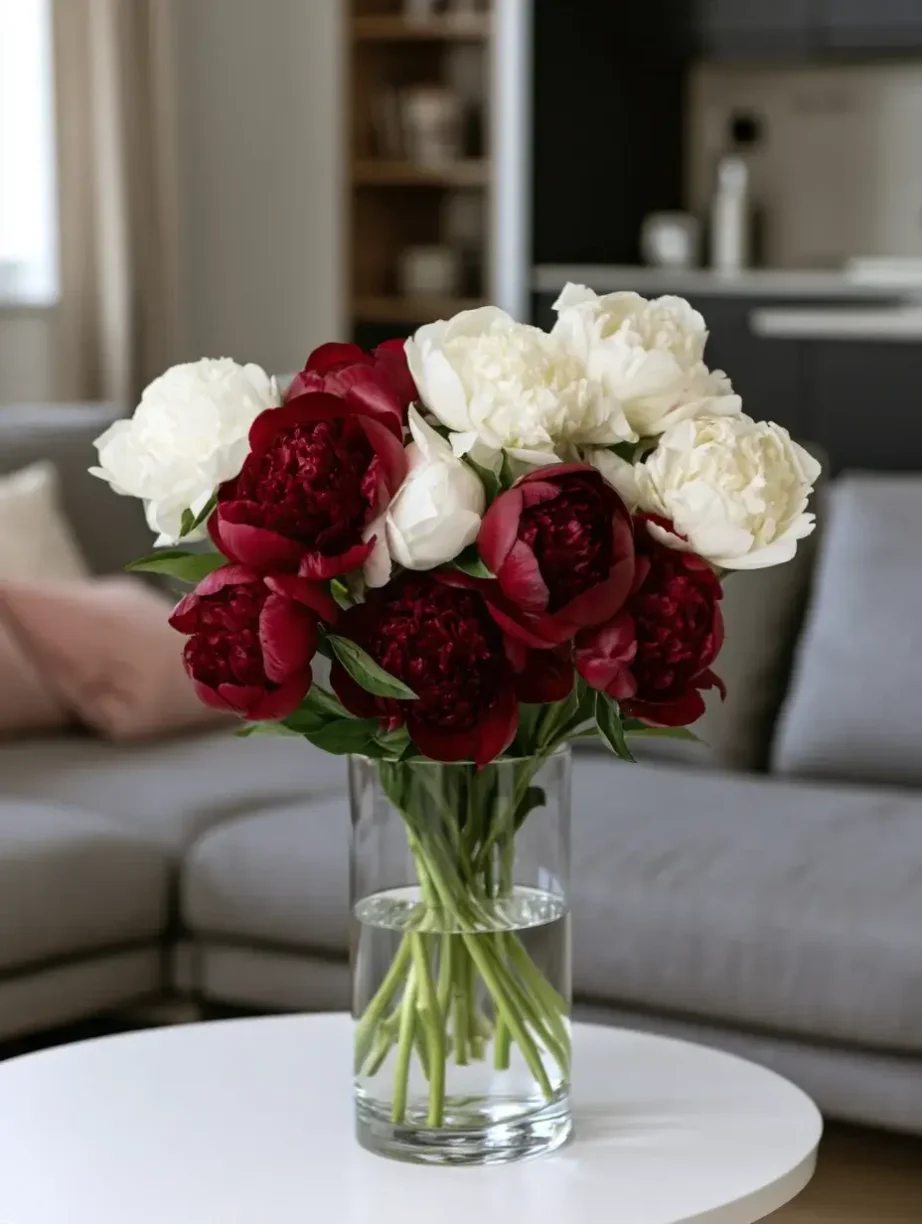
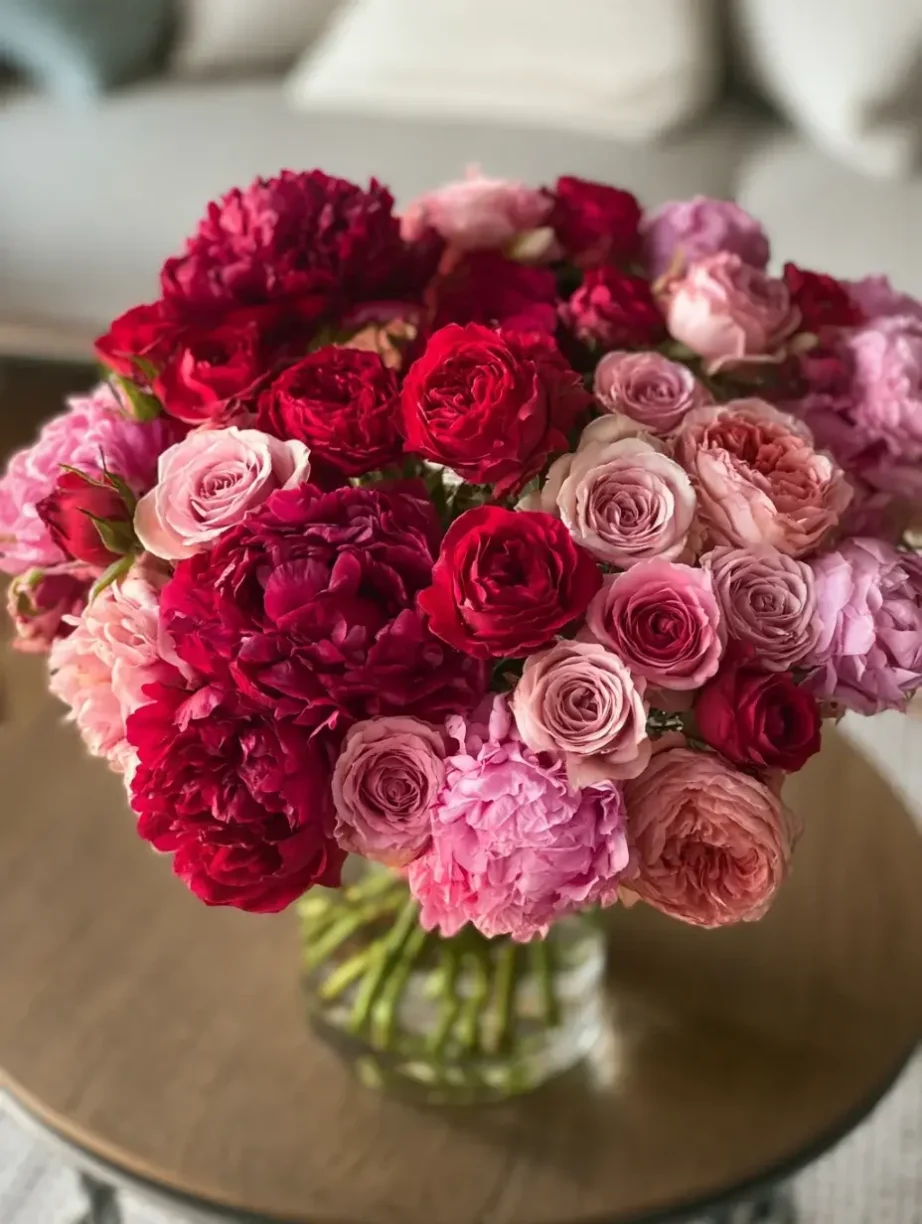
- For Warm Burgundy: Pair with creamy neutrals, warm blush, and soft ivory to create clear contrast, preventing the blooms from merging into a uniformly dark composition.
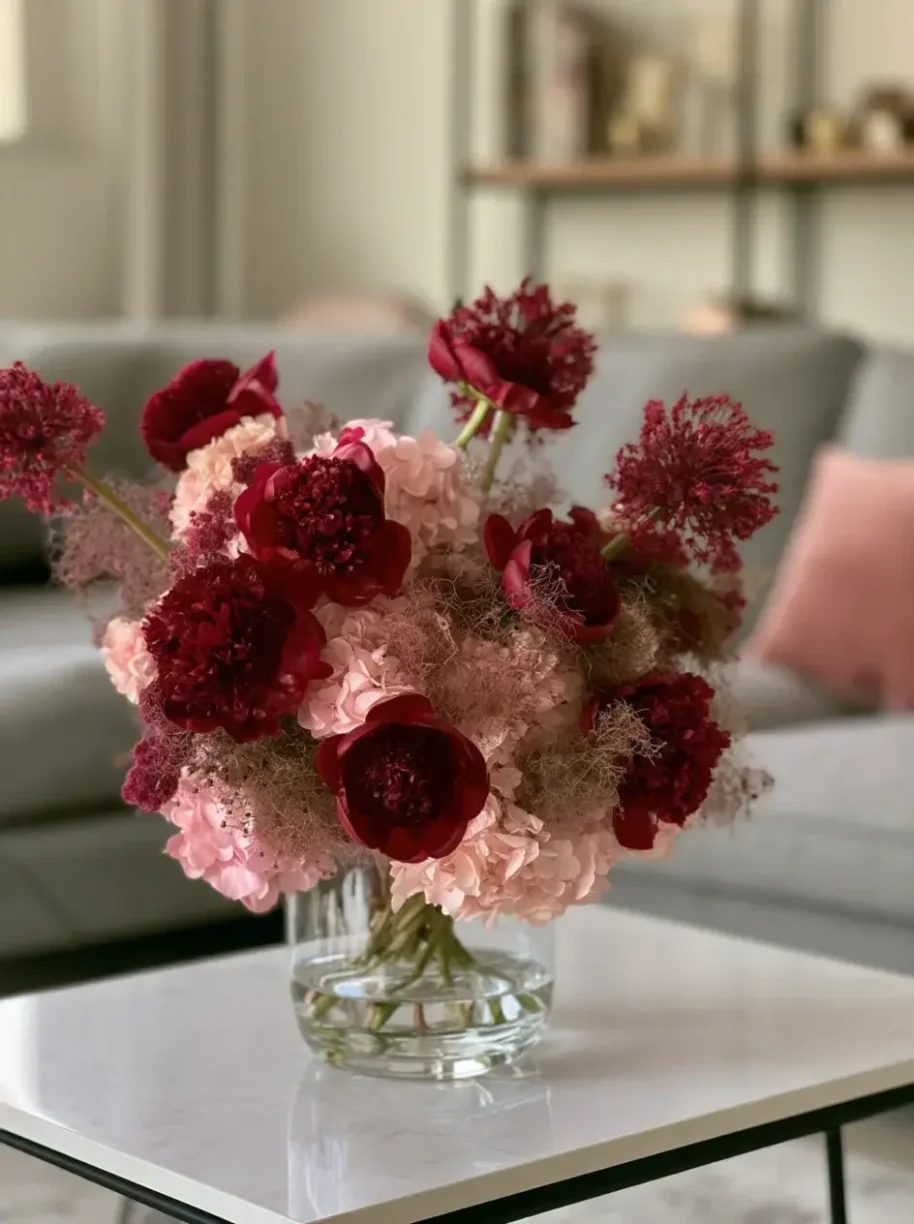
- For Cool Plum Tones: Balance with mauve, pale pink, or slightly silvery foliage for a softer, tonal transition.
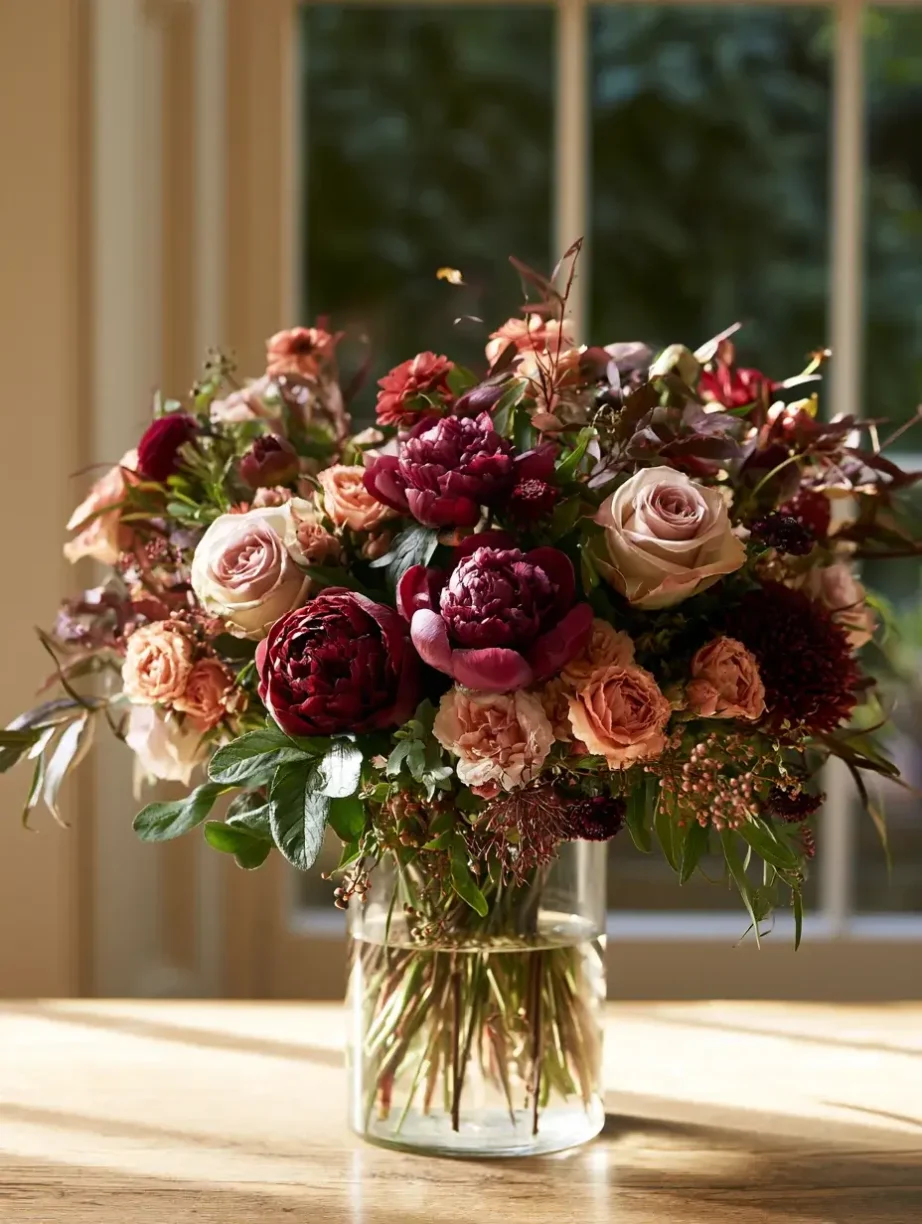
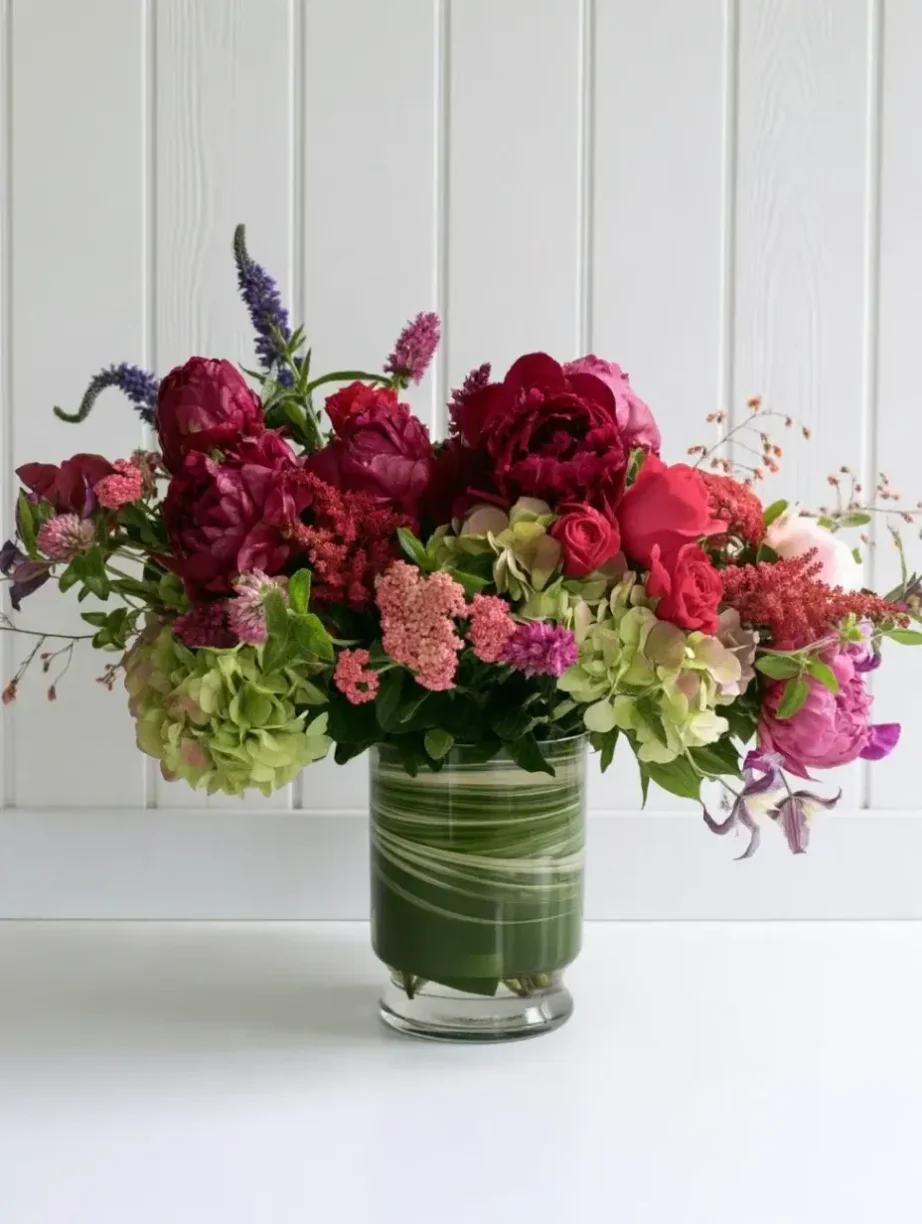
- The Role of Greenery: Restrained, soft greenery gives the eye a place to rest. Mixed undertones can work beautifully, provided you repeat each color in small amounts throughout the design to connect the palette.
3. Choosing Seasonal Companions
Select companion flowers whose shapes complement the peony’s lush, dense form without obscuring it.
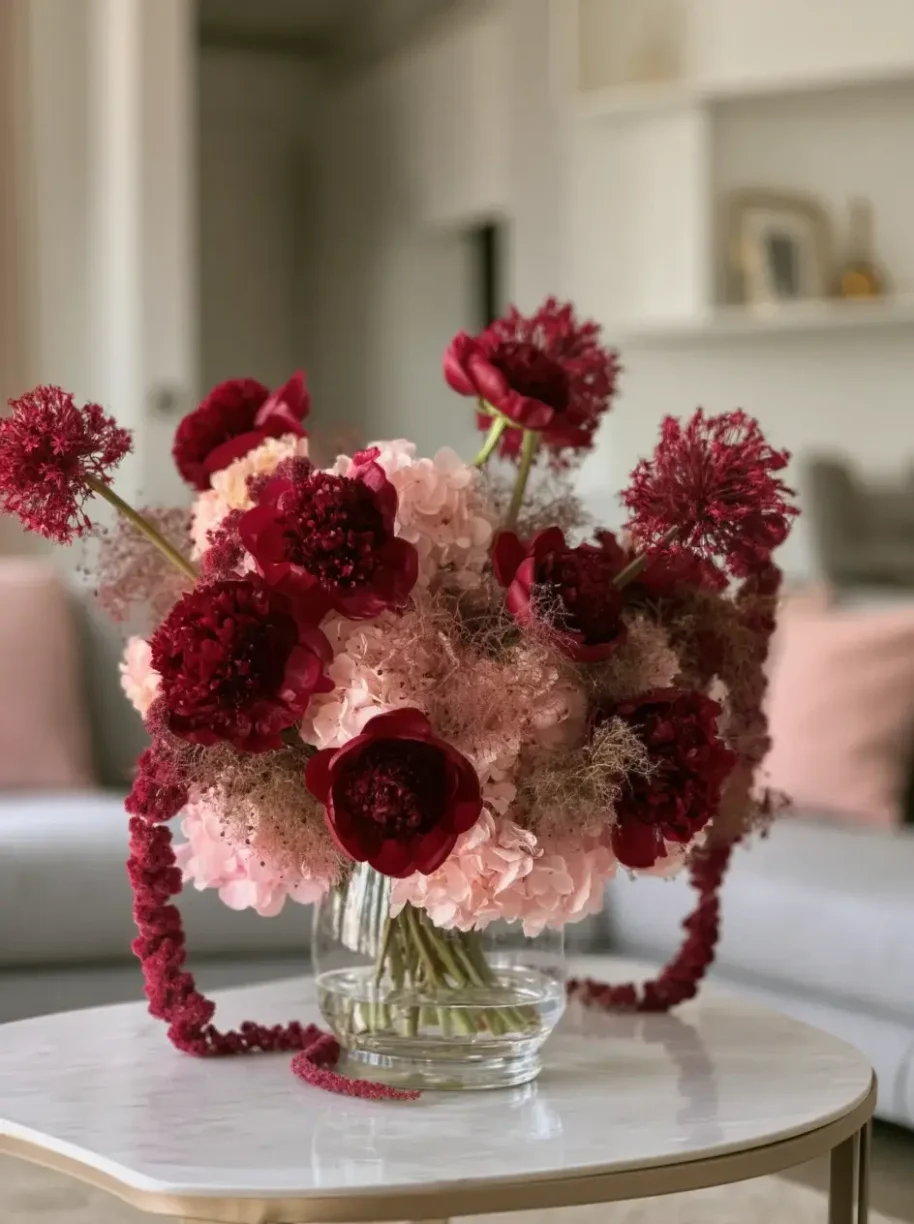
- Add Negative Space: Airier flowers create breathing room around dense peony heads.
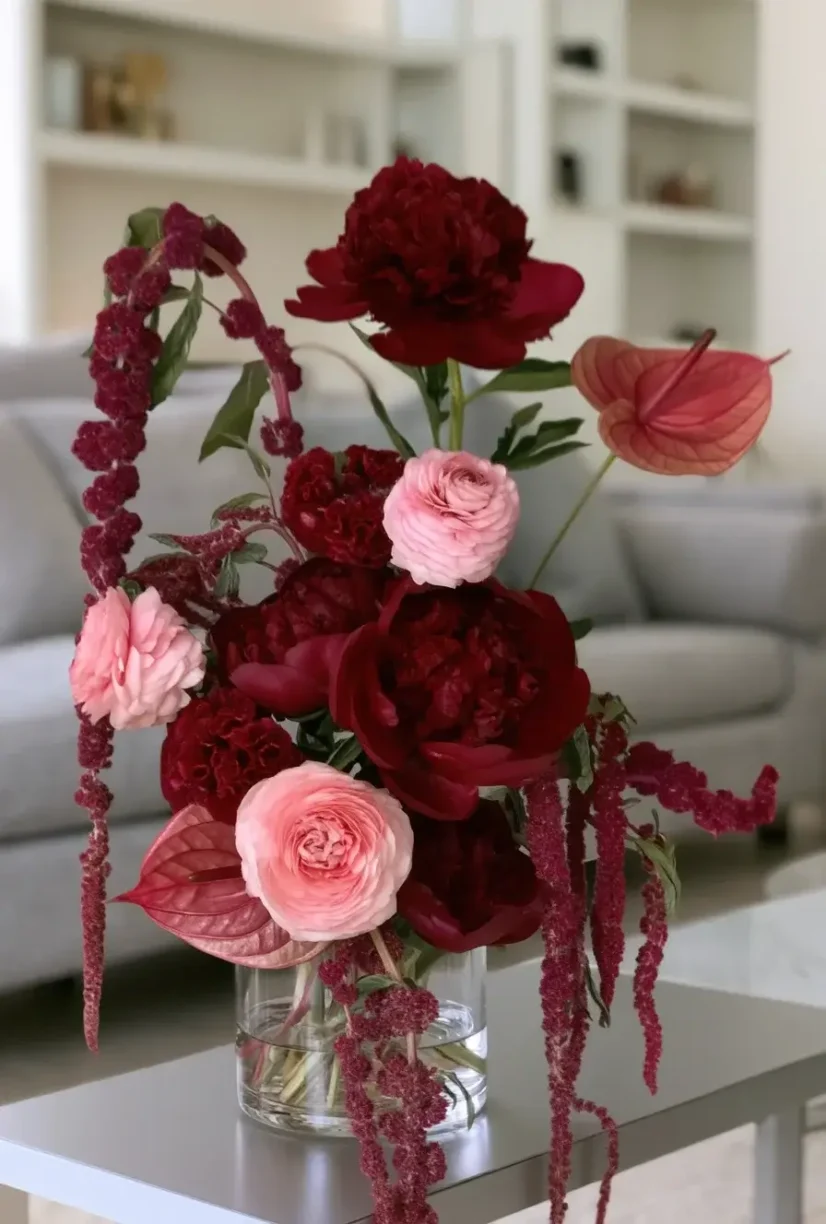
- Add Texture: Smaller clustered blooms add intricate texture. Depending on availability, garden roses, ranunculus, spray roses, or delicate fillers (like astilbe or waxflower) are excellent choices.
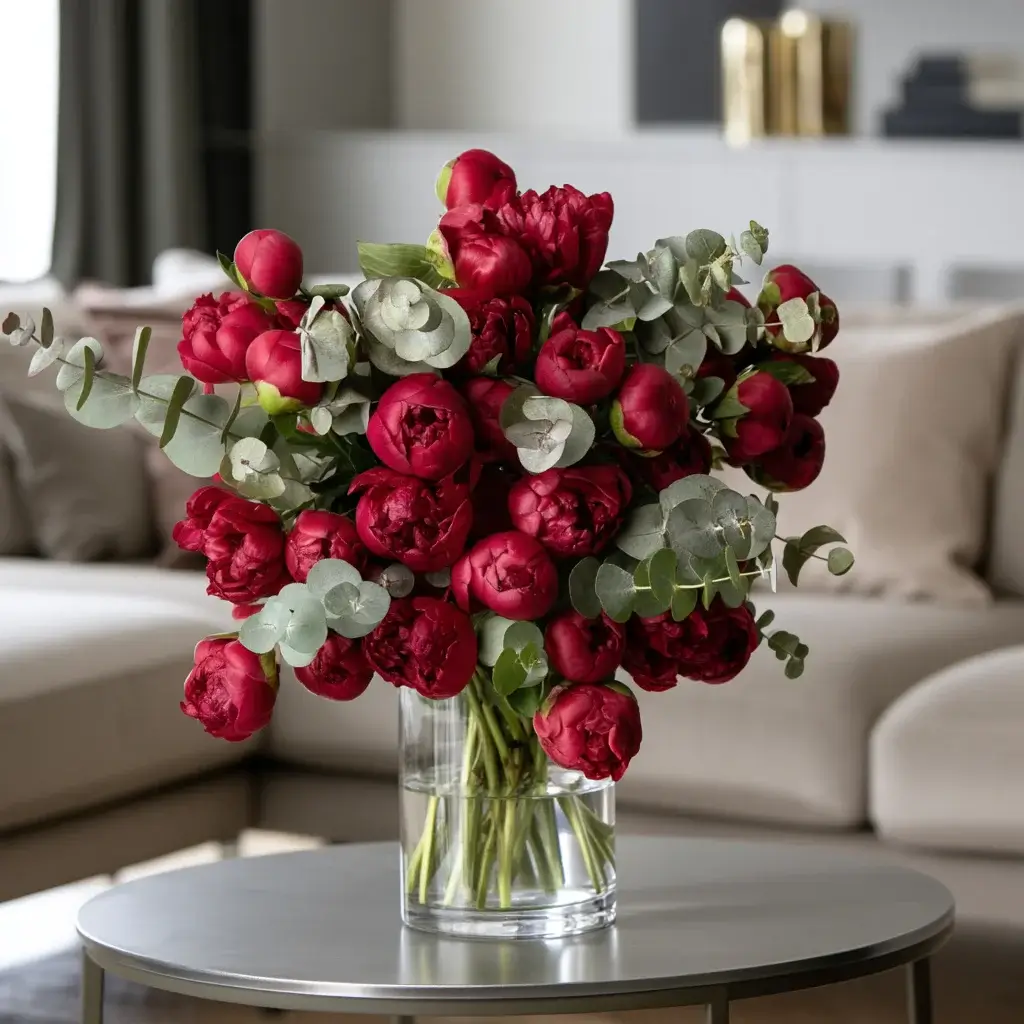
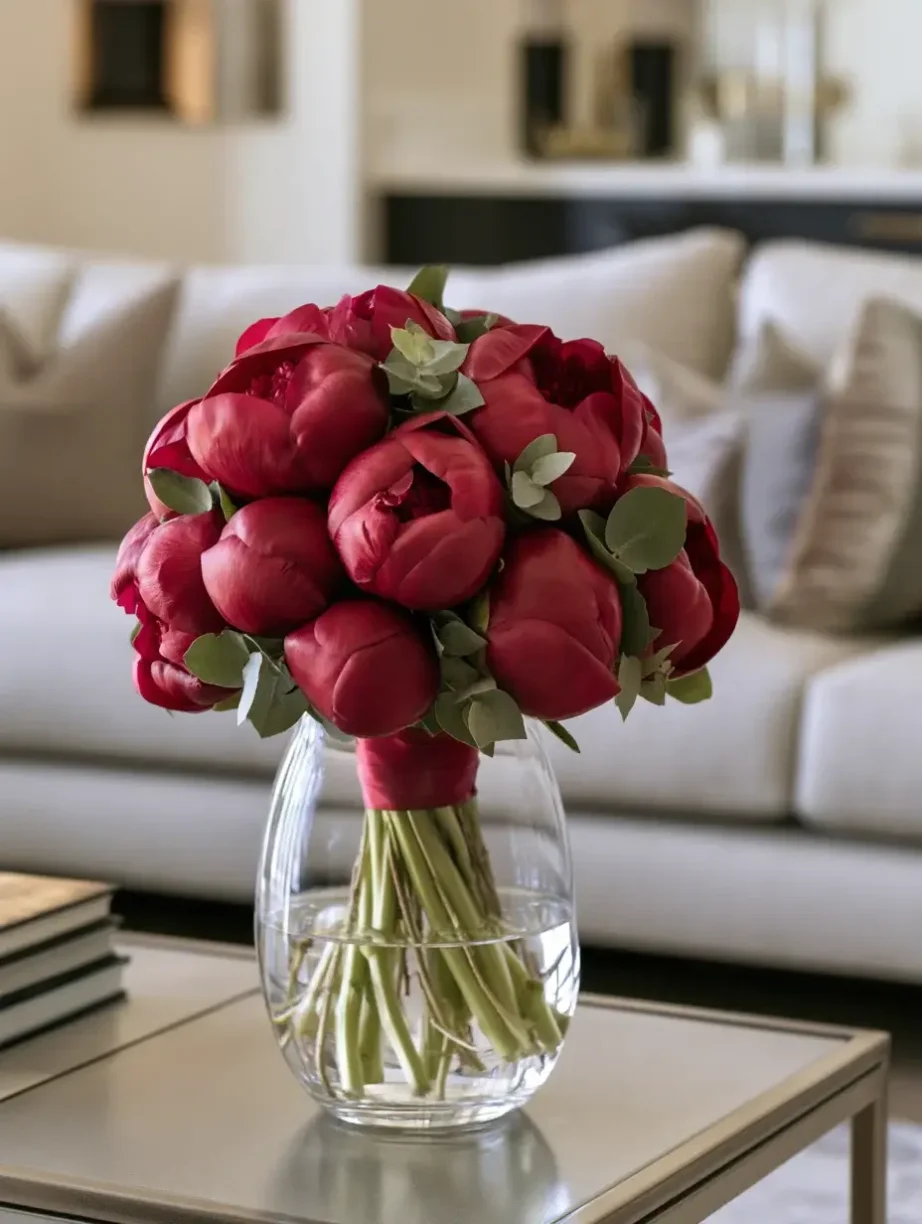
- Select the Right Foliage: Foliage should contribute structure and movement, not dominate. Fine-textured greens like eucalyptus or ruscus soften the outline, while broad leaves can provide useful contrast when used sparingly.
4. The Florist’s Toolkit: What You’ll Need
Gather your materials before beginning so the stems can move quickly from conditioning to arranging.
- Fresh burgundy peonies (mixed stages of opening)
- Supporting flowers and clean, restrained foliage (e.g., seeded eucalyptus, ruscus)
- Sharp, clean floral snips or shears
- A suitable vase (neutral colors let deep burgundy blooms stand out)
- Floral tape or a purpose-made floral grid for stem support
- Flower food
5. Step-by-Step Arranging Guide
Step 1: Prep and Hydrate
Prepare the flowers as soon as possible. Remove any leaves that would sit below the waterline, as submerged foliage decays and clouds the water. Recut each stem at a 45-degree angle with clean snips to expose a fresh surface for water uptake. Place them in a clean bucket with fresh water and flower food, and let them hydrate in a cool, shaded place before arranging.
Step 2: Choose and Prep the Vessel
The vessel’s height and width should support your intended scale. A broad opening accommodates a loose, spreading design, while a narrower neck helps hold stems upright. To secure the stems, stretch floral tape across the opening in a loose grid, or insert a floral grid. Keep the support discreet.
Step 3: Build an Open Framework
Begin by establishing a loose framework with greenery or slender supporting stems. Keep it open rather than building a dense mass; visible gaps give the arrangement room to breathe. Set stems at different angles to suggest outward growth, ensuring the framework has a clear, balanced silhouette.
Step 4: Place the Focal Peonies
Place the largest burgundy peonies first. Vary their heights, directions, and angles so they don’t form a flat row. Distribute the darkest blooms across the arrangement, allowing the eye to travel between them. Use lighter flowers and foliage between the peonies to create contrast and separation.
Step 5: Refine and Balance
Consider each peony’s stage of opening. A tight bud may sit higher or toward the edge, while a broad, fully open flower needs more space and can anchor a lower or central area. Step back and turn the arrangement to inspect its silhouette from all sides. Adjust stems to maintain an elegant, asymmetrical balance with gentle directional lines and alternating areas of fullness and openness.
6. Peony Care: Maximizing Vase Life
To keep your burgundy peony arrangement looking fresh and vibrant, follow these essential care rules:
- Change the Water: Replace the water every 1–2 days, rinsing the vase thoroughly before refilling.
- Recut Stems: Each time you change the water, trim a small amount from the stem ends at an angle to improve water uptake.
- Remove Debris: Check daily and remove any damaged petals or foliage, especially anything below the waterline, to prevent bacterial growth.
- Watch the Placement: Keep the arrangement away from radiators, direct sunlight, and strong drafts.
- Avoid Ethylene Gas: Ripening fruit releases ethylene, which causes flowers to age rapidly. Display peonies at a distance from fruit bowls.
- Let Buds Open Naturally: Some buds may be tightly closed when arranged. Allow them to open naturally in a cool room; never force them with warm water or extra heat.
7. Adapting the Design for Any Occasion
The rich burgundy palette is incredibly versatile. Adapt the design to its setting by adjusting the scale, vessel, and supporting materials:
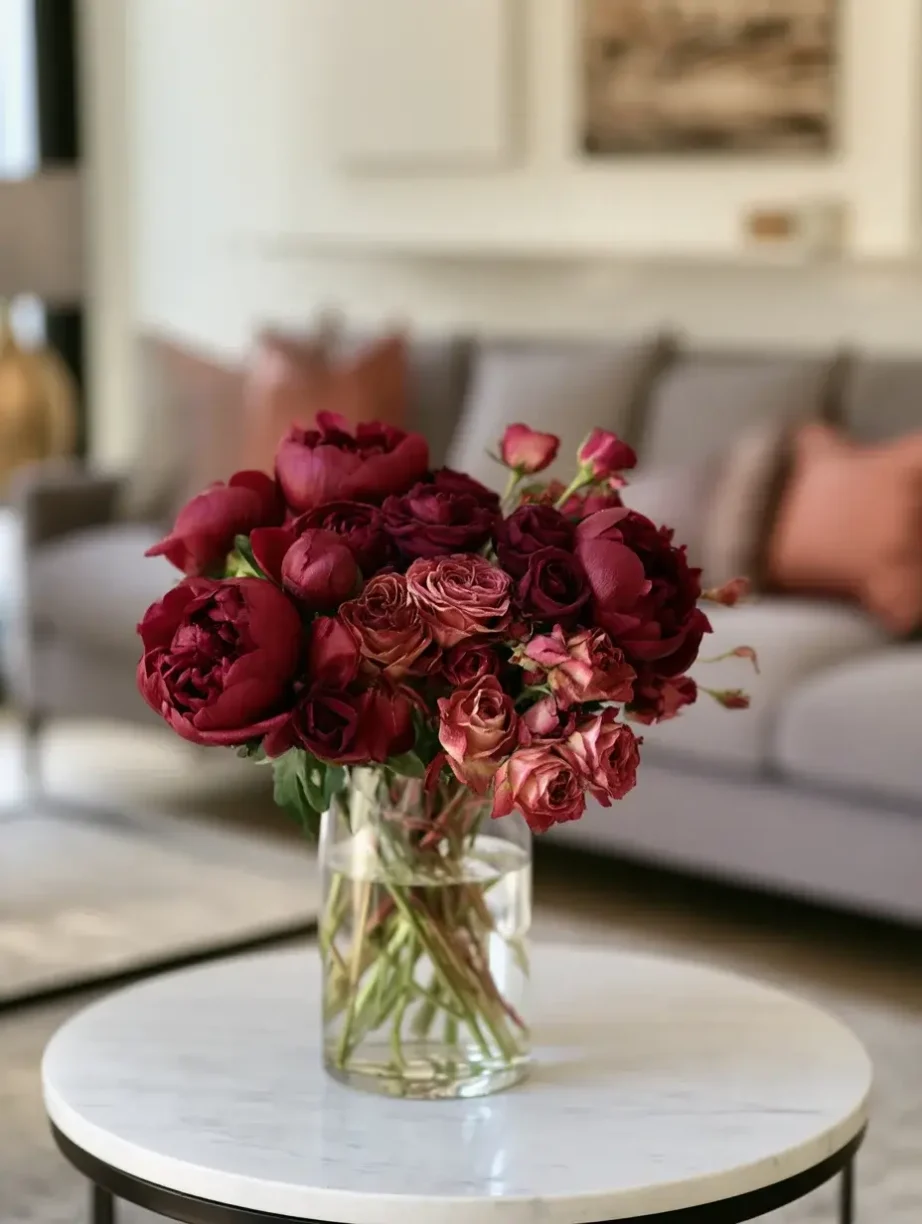
- Table Centerpiece: Choose a low, broad container to leave sightlines clear, arranging the peonies in a compact, horizontal form.
- Hand-Tied Bouquet: Create a more elongated shape with stems wrapped simply, using a few contrasting textures to frame the focal flowers.
- Ceremony Flowers: Repeat the burgundy tones in smaller arrangements, or combine them with softer neutrals for visual continuity down the aisle.
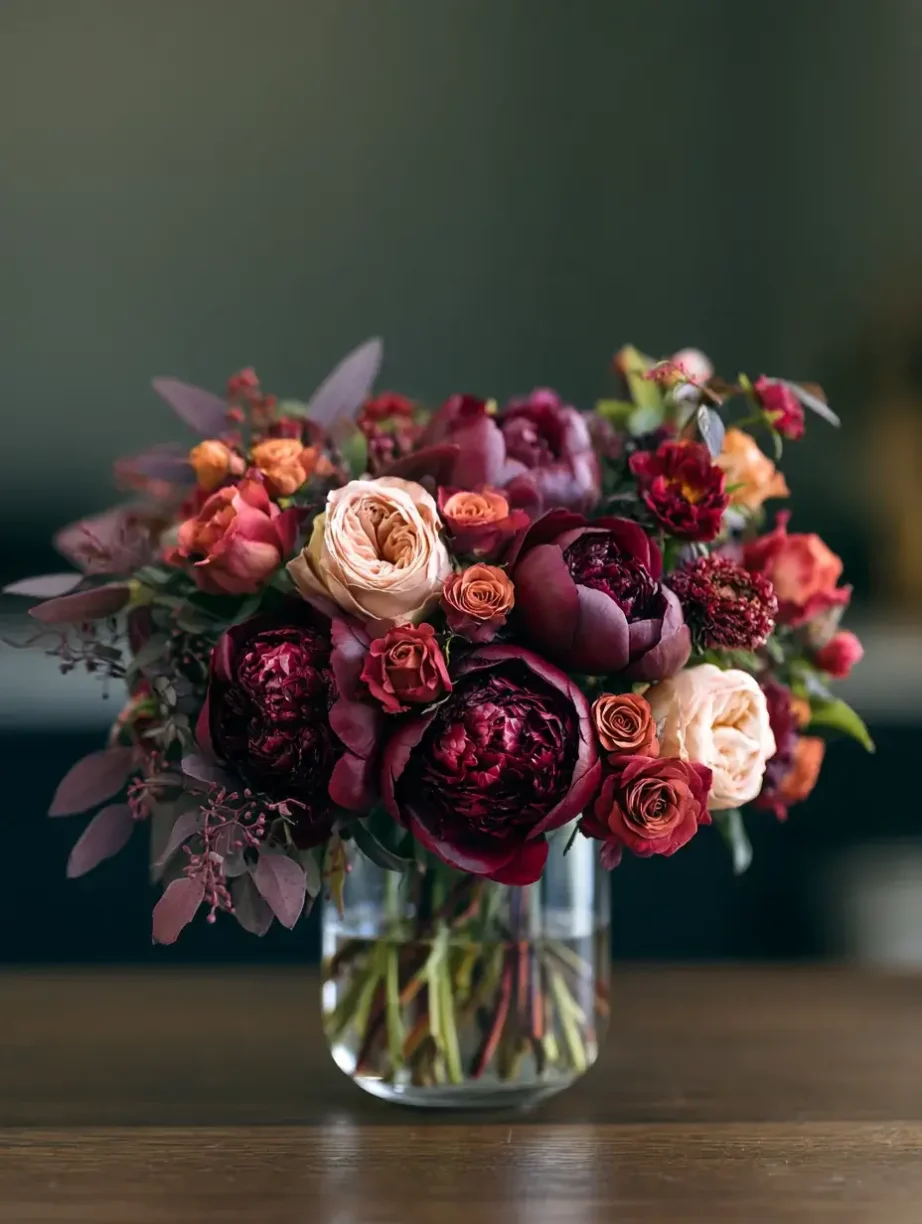
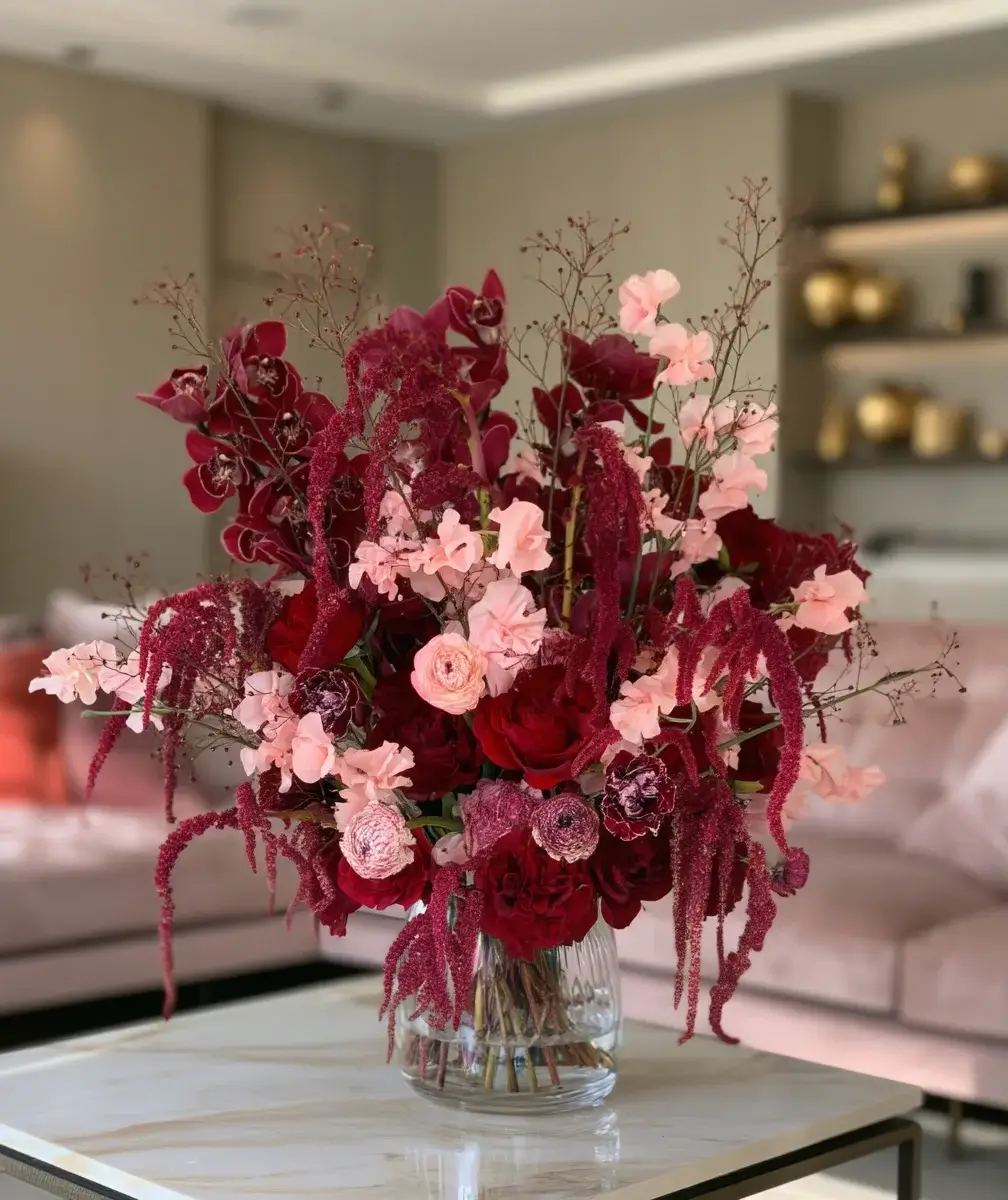
- Dramatic Seasonal Display: Use a taller vessel, generous branching, and deeper foliage or seed heads for added structure. Pair with copper, russet, and muted greenery for a refined, autumnal feel.
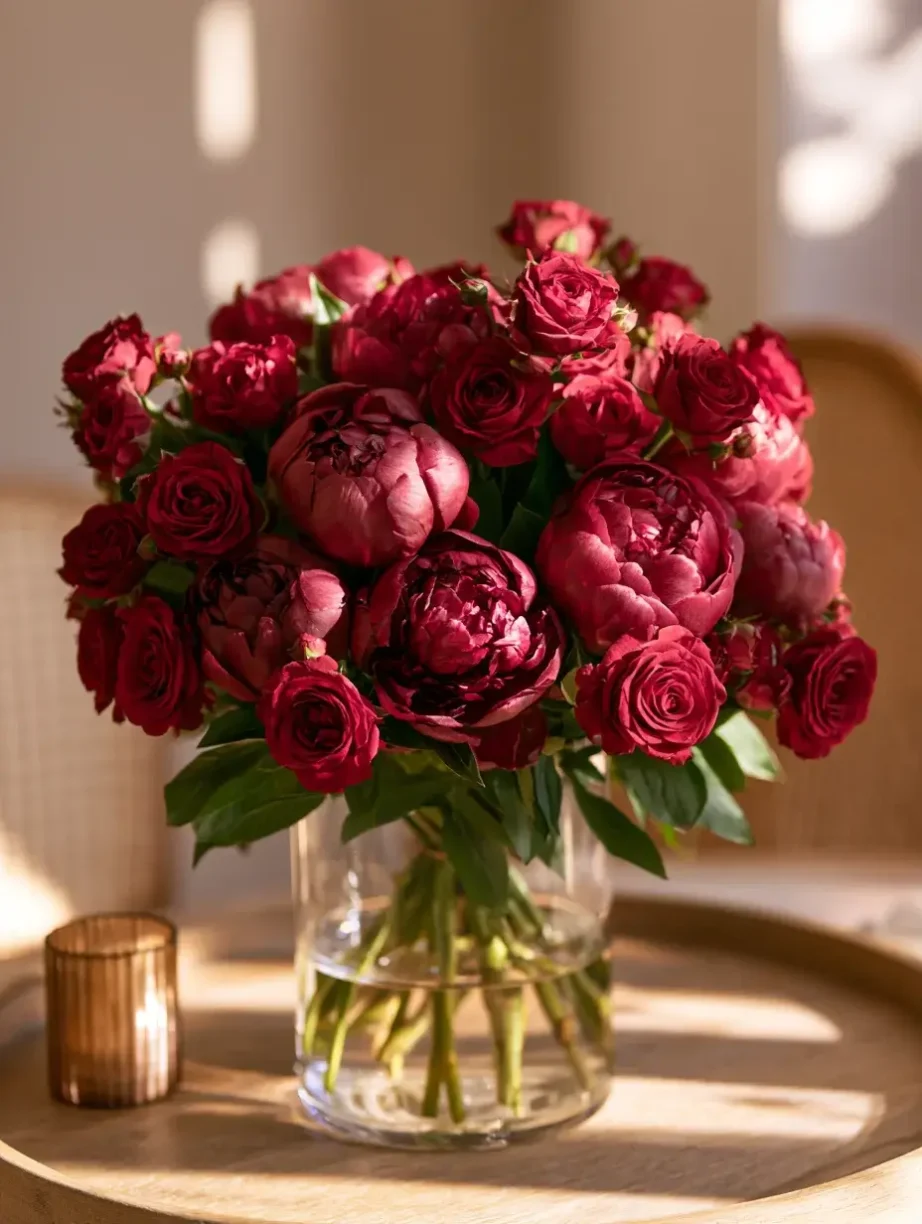
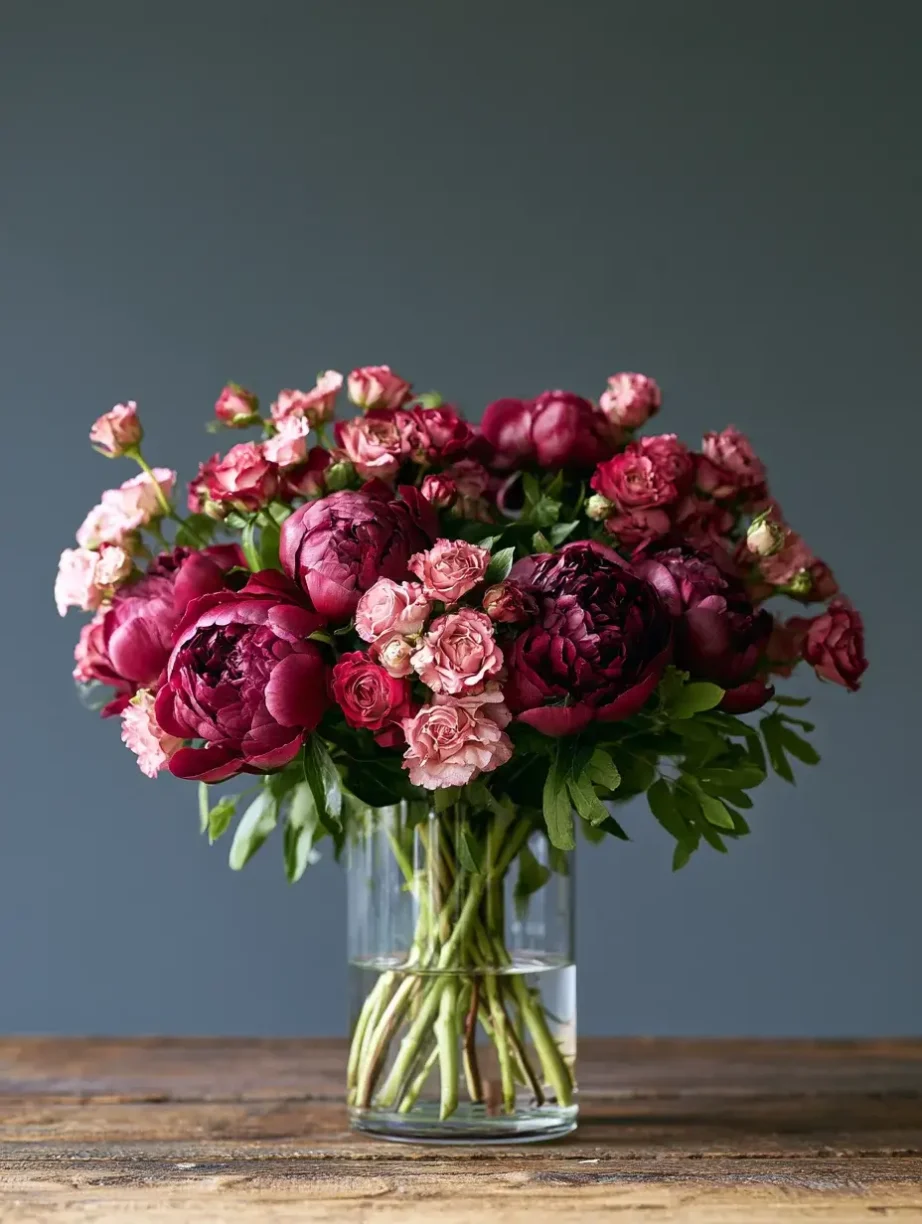
Let the occasion guide your balance: supporting materials should always add depth without competing with the peonies’ magnificent, layered petals. A personal, well-cared-for centerpiece will always feel more meaningful than one selected simply because it follows a trend.